Train FOR, not IN, a Situation
Your puppy was perfect…for about five minutes.
Now you’ve got a part-time alligator, full-time chaos coordinator, and a growing list of “what was I thinking?” moments. Somewhere between chewed shoes and late-night barking fits, you came to realize raising a dog takes more than love and good intentions.

Fast forward a few months, your little dream boat puppy has devoured slippers, stolen your dinner, chomped your remote control and dug up your garden. You’re living the dream - right?! And they have to outgrow this…RIGHT?
Then you blink.
Twelve months later you’re frantically calling trainers, emailing your vet, and searching online for “how to stop my dog from barking, pulling, lunging” or even the dreaded “should I rehome my dog?”
What went wrong?
Don’t give up on the dream you had when you brought your puppy home. And if you’re still in that “squishy-face, everything-is-adorable” stage…good news, you’re already ahead.
Every dog, regardless of age, breed, or background, has a brain that can be shaped and reshaped to make better choices; calm, confident, connected choices.
It’s just that most of us throw our dogs into situations they are not ready to handle and expect them to perform like seasoned pros. We hear “socialization is key” so we take our dogs everywhere…dog parks, breweries, busy trails…without teaching them how to process all that sensory input first.
Then, human nature kicks in, and we try to fix it in real time.
🤔 Our dog barks, we yell “NO! STOP IT! QUIET!”
🤔 Our dog lunges towards another dog and we yank back on the leash.
🤔 Our dog freezes - hackles up, tail stiff - ans we shove treats under their nose and say, “It’s okay! Good girl!”
The problem is this doesn’t work for any dog! They can’t learn, listen or make good choices while they are scared or overstimulated.
Train the brain before the moment happens
Brain Work training helps you to train for a situation rather than in the situation. You teach the concepts your dog needs—calm, confidence, flexibility, and self-control—before you ever face a challenging situation.
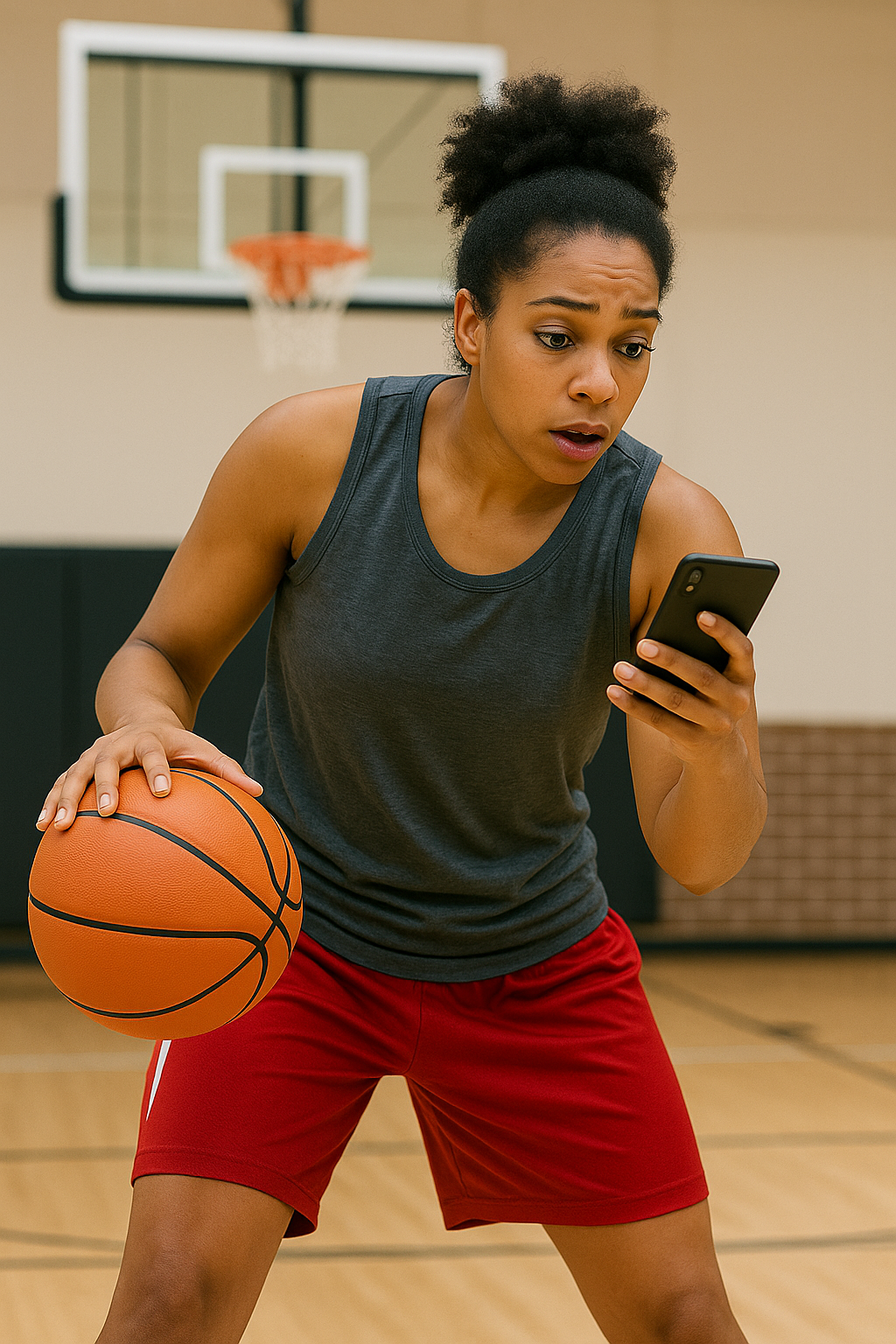
It’s just like preparing for human sports. You don’t wake up one day, think “I want to play basketball,” and head straight to the professional arena to suit up. You practice the skills, learn the rules, understand the positions, and run drills long before you ever play an actual game.
Imagine deciding to join the NBA after watching one YouTube video on dribbling. That’s what it’s like when we toss our dogs into busy situations before they’re ready. Practice calm first, then take it on the road.
Dogs need that same kind of preparation.
Start in a calm, familiar space. Once your dog can handle that, add mild distractions. Then slowly build toward new environments, closer distractions, or novel situations. This “proofs” their skills—meaning they can apply what they’ve learned anywhere they feel safe.
Trainer Tip: Dogs do not generalize skills and behaviors. In other words, they don’t automatically transfer skills and knowledge to new situations or environments. That’s why a dog who can “sit” perfectly on your living room rug might stare blankly when you ask for the same “sit” on a tile floor two feet away. It’s also why your dog may seem brilliant in obedience class but forgets everything in the parking lot.
When you train for a situation, you’re giving your dog the skills they’ll need before it counts. When you train in the situation, you’re just trying to survive it.
Build skills through games
That’s why our training is built around short, fun games. Two or three minutes here and there fit easily into your day and help your dog develop real-world coping skills without burnout for either you or your dog.
You don’t need anything fancy to get started. Say your dog loses their mind when the doorbell rings. You can teach calm using a simple simulation game:
Wait until your dog is relaxed.
Play a doorbell sound on your phone.
If they stay calm, toss a treat.
Add a mock “conversation” — “One moment! Hi, be right there!” — and reward calm behavior again.
That’s classical conditioning at work. You’re teaching your dog that doorbell sounds predict something good, not chaos.
The more you rehearse the behavior you want, the more it becomes your dog’s default.
We’ll dive deeper into how dogs learn—and how to help them generalize those skills—in an upcoming post.
Training for a situation instead of in it is the foundation of everything we teach. It’s how you move from chaos to calm and start building real connection with your dog. If you’d like to see how this idea fits into our bigger picture of how dogs and humans learn together, take a look at our BASICS Framework. It’s the foundation behind everything we do.